
Recent global events have underscored a hard truth. As long as energy markets remain tied to fossil fuels, volatility will continue to affect UK energy costs and businesses will feel the impact first.
Tensions in and around the Strait of Hormuz, a critical artery for global oil and LNG shipments, have severely disrupted shipping and energy supply routes, pushing up global oil and gas prices. Tankers are delayed or rerouted, insurance costs are rising and producers have temporarily halted exports. Those shocks ripple straight through to energy markets around the world.
In the UK, this matters because our electricity system still depends heavily on gas-fired generation and gas prices largely dictate electricity costs in the wholesale market. In fact, gas sets UK electricity prices around 98% of the time due to the way the market operates.
This connection means that events far beyond our shores can quickly translate into higher operating costs for UK businesses, both directly through energy bills and indirectly through broader inflationary pressures. It has already been highlighted how rising global gas prices could meaningfully add to inflation and increase energy bills in Britain, while businesses are expected to feel those cost pressures sooner than households.
Why Traditional Energy Cost Exposure Is Risky for Business
For most organisations, electricity costs are a significant and growing portion of operating expenditures. When fossil fuel markets spike, whether due to geopolitical disruption, supply bottlenecks, or shipping risks, those costs can erode profit margins, disrupt budgeting and create uncertainty in financial planning.
This has been a recurring theme in recent years. Supply chain interruptions, conflict-related price swings and broader global dynamics have repeatedly illustrated how dependent businesses are on volatile energy markets.
Energy Independence Through On-Site Generation
This is where strategic investment in on-site renewable energy becomes more than just a sustainability initiative, it becomes a commercial necessity.
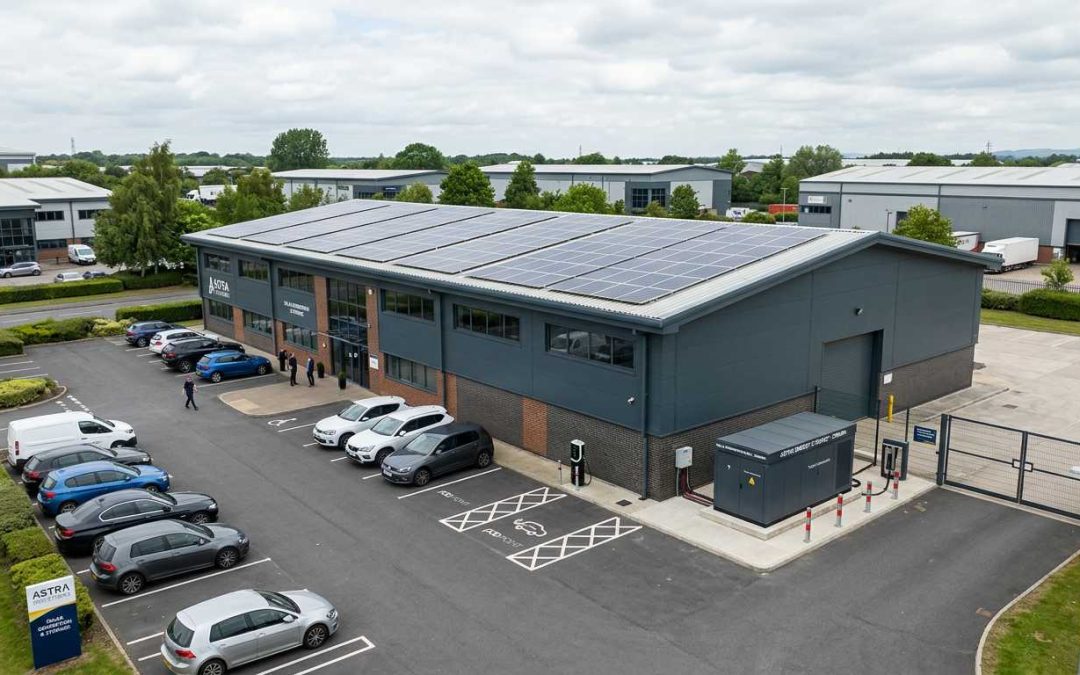
When a business installs its own generation infrastructure, like solar arrays and battery storage, it gains a degree of control and predictability over energy costs that the open market can’t offer. You’re no longer solely at the mercy of fossil fuel price spikes, international conflict, or shipping congestion. Energy you generate yourself is insulated from those global supply shocks.
Unlike grid energy, which fluctuates based on gas and oil markets, self-generated power delivers highly predictable costs over decades. Most commercial solar systems are designed to provide electricity for 25–30 years. This is typically around 9p per kWh for the life of the system.
This effectively freezes the cost of a significant portion of your energy budget on terms you choose. Surely this is a compelling proposition in a climate of uncertainty.
Battery Storage: Turning Volatility into Opportunity
Solar alone helps reduce reliance on the grid, but the addition of battery storage multiplies that value. Batteries allow businesses to:
- Store excess solar generation for use during peak pricing periods
- Reduce peak demand charges
- Mitigate grid dependency when prices spike
- Increase resilience during outages
- Arbitrage Energy Prices: Charge batteries during low-tariff or off-peak periods and utilise during peak pricing
Why This Isn’t Just a Nice-to-Have Any More
As global energy markets face repeated shocks, from geopolitical flashpoints to supply chain disruption, companies that rely entirely on externally priced energy remain exposed to rising costs and uncertainty.
Installing on-site renewable generation and storage is increasingly seen as a practical risk management tool, not just a sustainability checkbox. When energy costs are predictable and within your control, finance teams can plan with confidence and operations teams can avoid the disruptive impact of price spikes.
In financial terms, this transition is no longer experimental, it’s strategic. Predictable generation costs, when measured against volatile fossil fuel markets, often stack up as a “no-brainer” investment for businesses looking to protect margins and enhance resilience.
Conclusion: Invest in Control, Not Uncertainty
The reality is clear! As long as your business relies on external fossil fuel markets for energy, you’ll continue to feel the effects of global price volatility, whether due to conflict, supply disruption or market speculation.
But you don’t have to be passive.
By investing in commercial solar, battery storage and comprehensive energy strategy solutions, you remove a major variable from your cost base, improve business resilience and lock in predictable energy pricing for decades.
If you’re still thinking of renewable energy as a “nice-to-have,” now is the time to rethink that approach.
It’s not just about cutting carbon, it’s about cutting risk, protecting margins and taking control of your energy future.
Are you ready to explore how Verdant Future can help your business secure stable energy costs and strengthen resilience?
Learn more of our services here or contact us for a friendly chat